





Introduction
If you are searching for Hi Rasmus alternatives, you are usually trying to solve one of these problems:
-
Your team needs faster, cleaner data-taking in-session.
-
You need a better practice management layer (scheduling, billing, authorizations, payroll, credentialing).
-
You want telehealth and supervision that does not feel bolted on.
-
You want better reporting for BCBAs and leadership, without exporting everything to spreadsheets.
This guide breaks down the most common options ABA teams compare, what each one is actually best at, and how to choose based on your clinic setup.
TL;DR quick picks
-
Best for an all-in-one clinic plus RCM approach: Motivity (positions itself as connecting clinical workflows with scheduling, billing, claims, credentialing, and reporting).
-
Best when you want the “standard” enterprise ABA suite: CentralReach (common in larger orgs, especially when you need broad ops coverage).
-
Best when you want modern clinical data collection and a simpler experience: Raven Health (often short-listed alongside Hi Rasmus and Rethink on alternatives lists).
-
Best when you want a clinical platform with curriculum and structured programming: Rethink Behavioral Health (shows up consistently on ABA software alternative lists).
-
Best when you want to keep your existing stack and only swap data collection: Catalyst, Theralytics, and similar “data-first” tools (commonly debated in community threads).
-
Best when your issue is not your clinical tool but everything around it: Keep Hi Rasmus (or your current clinical tool) and build your operations hub and portals on Tadabase.
What Hi Rasmus is strongest at
Hi Rasmus is commonly discussed as an ABA platform with strong clinical tooling, and it is frequently categorized as a fit for practices that care about telehealth and supervision workflows.
If your biggest pain is clinical documentation, supervision, and session workflow, it can be a solid fit. If your biggest pain is operational scale (billing ops, credentialing ops, payor workflows, internal controls, cross-team reporting), many clinics look elsewhere or run a two-layer setup.
How to choose the right alternative
Before switching anything, decide which “job” you are hiring the platform to do.
If you need a true all-in-one
You want a platform that handles clinical plus scheduling plus billing plus claims and ties them together.
If you only need better data collection
You can keep your current PM system and replace just the clinical data capture layer.
If you need a more flexible operations layer
You may not need to replace your ABA software at all. You may need a system around it for approvals, intake, portals, tasking, compliance, and reporting.
Comparison table
This is a practical snapshot of what teams usually mean when they compare these products.
| Option | Best for | Typical tradeoff |
|---|---|---|
| Motivity | All-in-one approach that connects clinical work to operations and reporting | Switching can be heavier because it is more “platform” than point tool |
| CentralReach | Enterprise suite that is widely used across clinics | Can feel complex, and change management matters |
| Raven Health | Modern clinical experience and data-taking simplicity | You may still need add-ons or additional systems depending on ops needs |
| Rethink Behavioral Health | Structured programming and curriculum aligned workflows | Teams sometimes leave due to usability preferences in the field |
| Catalyst or Theralytics | Data-first tools when you want to upgrade capture and graphs | You still need a PM layer for scheduling, billing, authorizations |
| Keep your clinical tool and add Tadabase | Portals, workflows, approvals, internal systems, and reporting around your clinical stack | Requires design decisions, but you get exactly what your org needs |
Best Hi Rasmus Alternatives in 2026
Motivity
Motivity positions itself as an ABA platform that extends beyond clinical into operations. On its own comparison page, Motivity explicitly frames the difference as an all-in-one approach that includes operational modules (scheduling, billing, claims, credentialing, reporting) versus a more clinical-first approach that relies more on integrations for some operational pieces.
When Motivity is a strong fit
-
You want clinical and billing to line up cleanly.
-
You want credentialing and operational alerts in the same system.
-
You want dashboards and reporting that span clinical plus operations.
When it is not the best fit
-
You only want to replace data collection and keep the rest of your stack untouched.
-
Your team cannot take on a broader change this quarter.
CentralReach
CentralReach is widely referenced across ABA software alternative lists and is commonly shortlisted as a comprehensive suite option.
When CentralReach is a strong fit
-
Larger clinics with complex scheduling and billing realities
-
You need an established suite that can cover many functions under one roof
Watch-outs
-
Suite products require training and workflow enforcement or they can feel heavy.
Raven Health
Raven Health appears as a common alternative on major software comparison lists for Hi Rasmus.
When Raven Health is a strong fit
-
You want a more modern feel for clinicians and RBTs
-
You want easier adoption in the field
Watch-outs
-
Validate the operational parts you need most, since some teams still run a separate PM layer depending on how they bill and schedule.
Rethink Behavioral Health
Rethink is consistently included on Hi Rasmus alternatives lists.
In community discussions, teams can have strong opinions about usability, so it is worth doing a short pilot with actual RBT workflows before committing.
When Rethink is a strong fit
-
You value structured curriculum and programming workflows
-
You want a known product that many agencies have experience with
Watch-outs
-
Adoption can vary by team and role. Pilot it with the people who will use it daily.
Catalyst and Theralytics
If your main pain is data capture, graphing, and clinical workflow, many agencies consider more “data-first” tools rather than switching their entire practice management stack. These tools are frequently discussed in roundups and community threads that compare day-to-day field usability.
When these are a strong fit
-
You already have scheduling, billing, and notes handled elsewhere
-
You want to upgrade only the clinical capture layer
AlohaABA, ABAdesk, Noteable, S Cubed, CR Essentials
If you are building a shortlist, these names show up repeatedly on major alternatives pages for Hi Rasmus.
They can be worth evaluating if your team has a very specific combination of needs (for example, a certain billing workflow or a specific style of documentation).
The build-your-own path with Tadabase
Many ABA agencies discover that their biggest bottleneck is not the clinical tool. It is everything around it:
-
intake and insurance verification workflows
-
referral pipelines
-
authorizations tracking
-
staff onboarding and credentialing checklists
-
internal approvals for purchases and hiring
-
caregiver portals and internal portals
-
cross-team reporting that combines clinical, ops, and finance
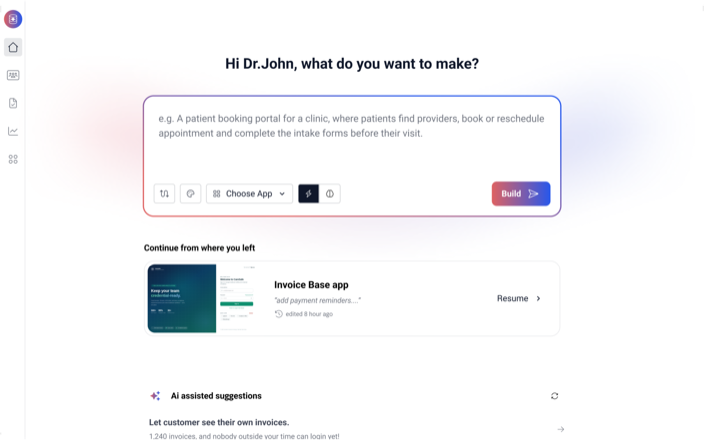
If you like your clinical platform but hate your internal admin processes, you can keep Hi Rasmus (or any clinical system) and build the missing operational layer on Tadabase.
What agencies build on Tadabase
-
Intake and referral portals
-
Authorizations tracker and alerts
-
Staff credentialing tracker with expirations and approvals
-
Internal tasking and accountability workflows
-
Operations dashboards for leadership
-
Role-based portals for therapists, supervisors, finance, and admins
Why this can be the best option
-
You avoid ripping out your clinical system
-
You can match your exact workflows
-
You can iterate quickly as payors and requirements change
If you want to evaluate this path, the key question is simple: What is the smallest operations workflow you can build that removes the most friction in 30 days? Start there.
What to check before you switch
Use this as your switching checklist.
Data and reporting
-
Can you export everything you need cleanly
-
Are graphs usable for BCBAs in real time
-
Can leadership reporting be done without manual work
Field usability
-
RBT workflow speed
-
Offline or low-connectivity behavior
-
Error handling and session recovery
Operations
-
Scheduling realities for your service model
-
Billing and claims workflows
-
Authorizations and payer rules
-
Credentialing and compliance needs
Support and implementation
-
How onboarding is handled
-
Response times for issues
-
Who owns configuration changes
Frequently asked questions
What are the best alternatives to Hi Rasmus
Motivity, CentralReach, Raven Health, and Rethink are commonly included in mainstream alternatives lists, with several additional tools like Noteable, AlohaABA, ABAdesk, S Cubed, and CR Essentials appearing frequently as well.
Should I replace my ABA platform or just add tools around it
If your clinical workflows are working but ops is broken, adding an operations layer can be smarter than switching your entire platform. This is where building portals and workflows on Tadabase can make sense.
What is the fastest way to decide
Run a short pilot with real RBT sessions and real supervisor review. The “demo experience” often does not match field reality.
Conclusion
If you are switching platforms, shortlist 2 to 3 options and pilot them with the same workflows and the same roles. If you are not switching platforms, map your top 3 operational bottlenecks and decide what you can build around your current stack in 30 days using Tadabase.